Strategic Throws: How Dart Players Plan Their Game Against Their Opponent

Strategic Throws: How Dart Players Plan Their Game Against Their Opponent
To the casual viewer, darts might look like a simple game: hit the board, aim for the bullseye, and rack up points. But behind every precise throw lies a world of strategy, psychology, and preparation. Professional dart players don’t just rely on muscle memory—they build tactical plans to exploit their opponent’s weaknesses and maximize their own strengths. Here’s a look at how top players think before they throw.
From Random Throws to Calculated Play
At the amateur level, darts often comes down to aiming high and hoping for the best. But in professional play, every throw is part of a larger plan. Players must “check out” a leg by hitting exact combinations that bring their score to zero. That requires not only accuracy but also quick mental math and foresight.
Elite players memorize hundreds of possible combinations. If they’re sitting on 121 points, they know the textbook route: triple 20, single 11, double 14. But the choice isn’t always that straightforward. If their opponent is close to finishing, a player might opt for a riskier but faster route to close out the leg first.
Knowing Your Opponent
A huge part of dart strategy is reading the person across the oche. Some players thrive under pressure, while others lose focus if the rhythm changes. Experienced players use this to their advantage—slowing down their pace or speeding it up to disrupt their opponent’s flow.
Many professionals also study their opponents’ past matches. They analyze which targets they favor, how they react to missed shots, and what patterns they repeat under stress. This kind of preparation can make the difference when the match tightens and every dart counts.
The Psychology Behind Precision
Darts is as much a mental game as it is a physical one. A player can have flawless technique, but nerves can easily throw off their aim. That’s why mental routines are a key part of training: controlled breathing, visualizing the throw, and focusing on the process rather than the outcome.
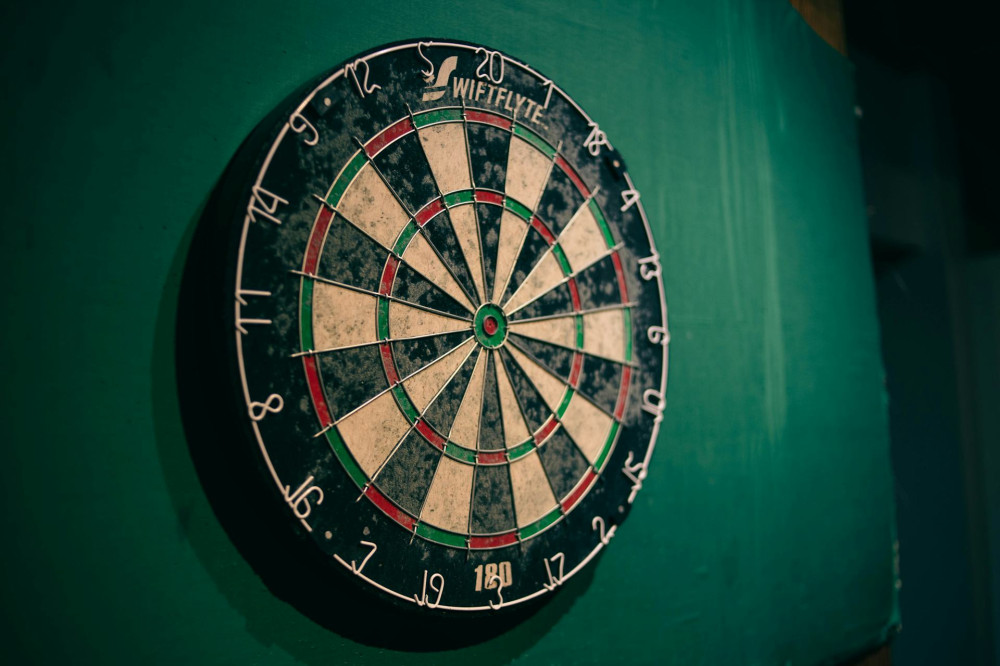
Staying calm when your opponent hits a 180 (three triple 20s) is an art in itself. The best players don’t get rattled—they stick to their plan, even when the crowd roars and the adrenaline spikes.
Data and Analytics as a Competitive Edge
Modern darts has embraced data. Players and coaches now analyze detailed statistics on averages, finishing percentages, and scoring patterns. This helps identify which segments of the board a player hits most consistently and where improvement is needed.
Some professionals even use software to simulate match scenarios—like facing an opponent who consistently scores high—to refine their tactical responses. This data-driven approach makes their strategy sharper and more adaptable.
Purposeful Practice
Strategic thinking starts long before the match. Instead of throwing aimlessly, players practice specific sequences and finishing routes. They train to switch plans instantly if a dart lands off-target and to maintain focus through long, high-pressure games.
Many also incorporate “match simulation” into their training—adding time limits, background noise, or even mock audiences to recreate tournament conditions. This helps them transfer their strategy seamlessly from practice to competition.
Læs også:
When Strategy Meets Instinct
Despite all the planning, darts still demands quick thinking. A player might have a perfect plan, but one missed dart can change everything. That’s when instinct and experience take over.
The best players know when to stick to the plan and when to take a calculated risk. Balancing strategy with intuition is what separates a good player from a great one.
Strategy at the Heart of the Game
To spectators, darts might look like a straightforward test of accuracy. But for the players, it’s a mental chess match played with steel-tipped arrows. Every decision, every pause, and every throw is part of a bigger picture. It’s this blend of skill, psychology, and strategy that makes darts so captivating—both for those at the oche and those watching from the crowd.
Læs også: